The Ultimate Guide to Online Advertising
Marketing, a crucial component of corporate management, includes methods and techniques meant to cultivate relationships with clients. It entails spreading awareness of the brand through well planned and carried out actions. Advertising, a subset of marketing, is the use of multiple communication channels to influence a target audience to do certain actions, like making a purchase of a good or service.
Ignoring digital platforms in marketing would be a missed opportunity given that there are currently over 4 billion Internet users in the world. Marketers have the freedom to reach their target audiences in a variety of ways and with a variety of budgets because to the Internet’s direct access to a large global audience and its numerous advertising channels. Because of this, in the current digital era, a marketing strategy is seen insufficient if it ignores digital platforms.

What Tool can I use to Increase my Online Presence?
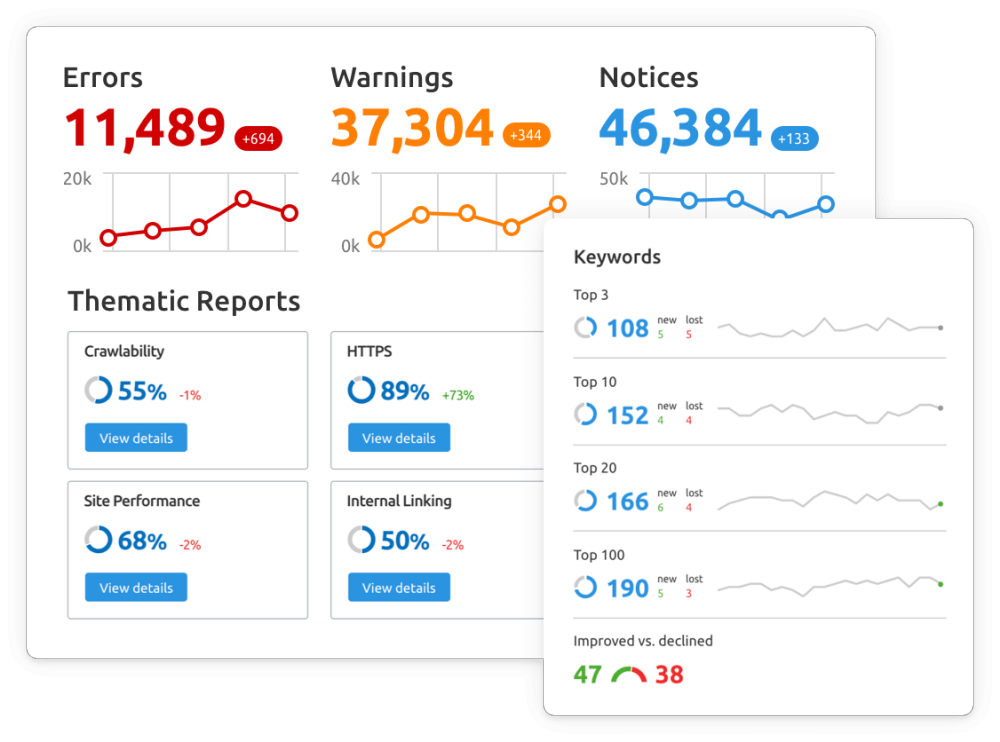
SEMrush is a solution for online marketing that assists users in effectively facilitating strategic planning and comprehending what is occurring in their industry and specialty. It is a research and business intelligence tool that offers information and analysis on link-building campaigns, social media, mobile data, and sponsored and organic search worldwide. In a nutshell, it is an all-in-one program that offers clients useful information to help them establish content strategies, assess competition and market trends, and analyze websites.
What is Paid Search Advertising?
Every search engine, including Google, Bing, Yahoo!, Yandex, and Ask.com, has its own paid advertising. Paid search ads are accessible to and advantageous for companies of all sizes. Pay-per-click, or PPC, includes placing adverts at the top or sides of search results and bidding on keywords.
We first need to comprehend the search engine results page in order to better understand sponsored search advertising (SERP). A search engine, such as Google, returns a list of web pages that are related to the terms we inputted when we enter a query. The SERP is this page. That list includes a sizable portion of websites that Google’s algorithm thought would be the best match for our search. Additionally known as organic results.
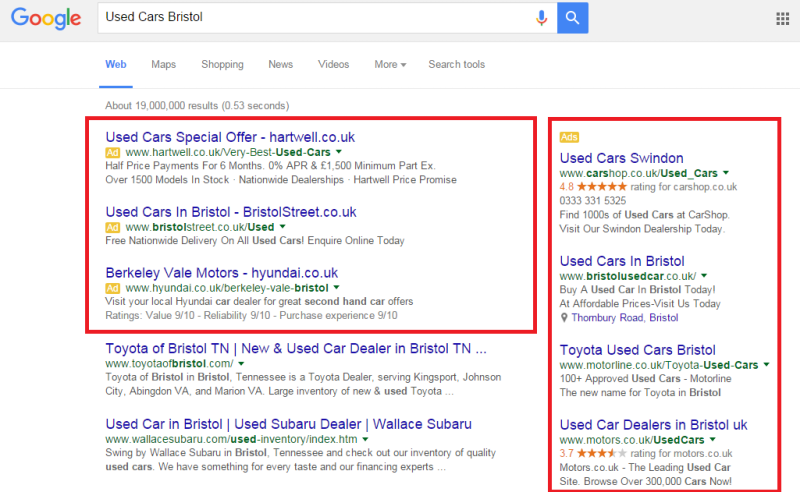
Results that show up at the top and sides of the SERP are also visible, though. These are sponsored search advertising, which resemble the organic results or listings in appearance save for the fact that they are identified as ads or Ads. Paid adverts, also known as PPCs, are effective because they place the commercials in front of people who are already searching for the same topics.
What is Social Media Advertising?
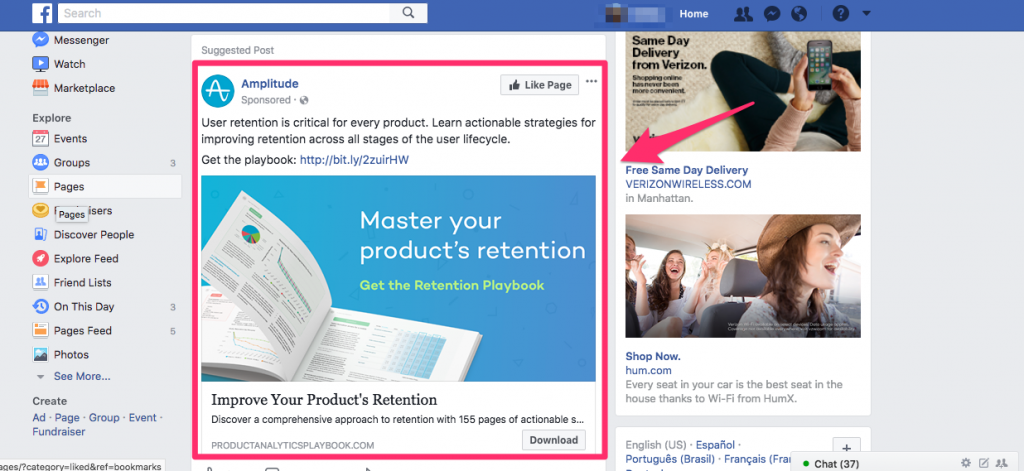
Serving ads to users on social media platforms is the definition of social media advertising. Around 2.77 billion people used social media globally in 2019, according to Statista. It will total roughly 3.02 billion by 2021. Social media sites have the ability to sponsor or boost postings because of this. Through the use of advertisements, the corporation can reach its intended audience. They can easily persuade visitors to interact, click through, and make a purchase. In order to increase their revenue, social media platforms are increasingly clearly preferring ad space over original content.
The good news is that social media advertising may help any brand or company. The only channel that regularly generates purchases from day one may be social media, given the rising number of users across the globe. In addition to marketing the social media page to increase its following, it serves the dual purposes of promoting goods or services and product advertising. There are advertisements on the pages of Facebook, Instagram, LinkedIn, and Twitter, respectively. For instance, Facebook offers a variety of advertising options, including Promoted Posts, Sponsored Stories, and plain Marketplace Ads.
What are Native Ads and Sponsored Content?
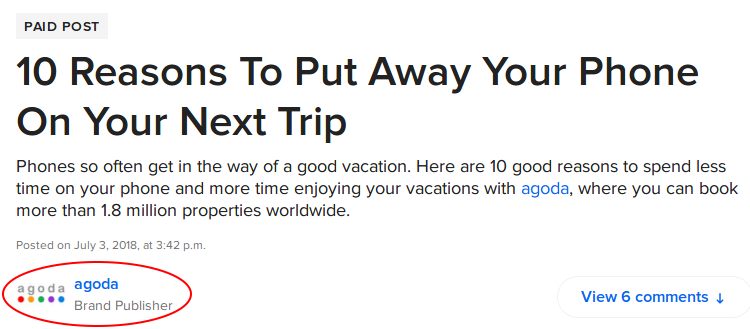
Native advertising and sponsored content are two examples of paid media tactics. They are designed to complement the editorial content around them on a webpage in both shape and function. It appears “native” to the page as a result. The primary distinction between the two is that native advertising resembles a standard advertisement while sponsored content resembles a media placement.
To entice people to click on the link, native advertisements have a headline and description. After that, users are sent to sponsored content or an article on a brand’s website. A form of brand journalism known as sponsored content resides on a publisher’s website. Since it’s typically authored by a member of the publishing team, the tone and voice of the piece are consistent with the rest of their offerings. A wonderful approach to advertise a company in already popular material is through sponsored content. Depending on what the company wants to accomplish, each type has a different function and will be most effective in that endeavor.
What are Banner and Display Ads?
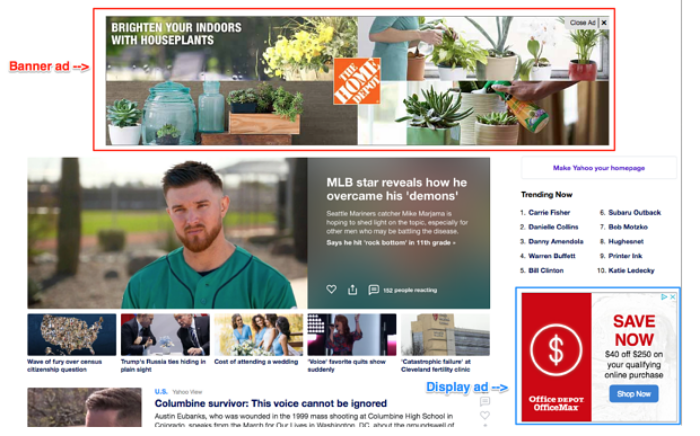
Display advertising is typically characterized by graphic or text banner adverts that show in predetermined locations on a website or social media platform. The digital display is available in a range of shapes and sizes, including still photos, animated HTML5 adverts, and GIF advertisements. On top of a web page, banner adverts typically take the form of horizontal boxes. Display advertisements are often side-by-side and smaller.
Based on the purpose they serve, display advertising typically falls into one of three categories.
- Retargeting
- Acquisition
- Brand Awareness
A retargeting campaign’s main objective is to re-engage past customers with the brand’s goods. An acquisition campaign’s objective is to bring in new clients. The expense, adblockers, users’ propensity to disregard banner advertisements, and other factors make it the hardest of all. Instead of making a transaction, brand awareness through display ads concentrates on reaching as many relevant people as possible and inspiring them to become interested in one’s business.
However, native advertising has gained popularity recently. They receive 52 percent more views than display advertising, which increases brand lift, claims a research. Additionally, native advertising investment is rising, accounting for 56% of all online advertising in the US in 2016. By 2021, spending is anticipated to increase by 74%.
Conclusion
There are several benefits to online advertising. By placing advertisements where their target market spends its time, business owners may reach the clients they want. Online advertising enables small business owners, for whom every dollar counts, to set a precise budget. Another benefit is that online advertisements enable for end-to-end tracking, which tells advertisers how often their ads were posted, how many people saw them, how often they were opened, and more. Business owners can even analyze the effectiveness of two separate advertising campaigns using A/B testing.